





 download PDF

Introduction
Aboriginal and Torres Strait Islander Peoples (hereafter Aboriginal Australians, as the preferred inclusive term in the Northern Territory (NT) of Australia) are resilient and have access to protective factors such as cultural identity, connection to family and access to traditional lands that can positively influence overall health and wellbeing1,2. Despite this resilience, Aboriginal Australians in the NT have a shorter life expectancy than non-Aboriginal Australians3 by almost 14 years, and in very remote areas experience a total burden of disease 2.7 times the rate of non-Aboriginal Australians4. Primary healthcare workers and services in the NT are in increasingly short supply relative to need5. The burden of disease and the difficulty of retaining healthcare workers in very remote areas6 makes delivering high-quality, accessible, and culturally safe primary health care in very remote areas a challenge. Studies of 54 remote and very remote Aboriginal NT communities identified a U-shaped association between the average number of annual primary healthcare visits and hospitalisations; a minimum number of hospitalisations was found with 20–30 annual visits for diabetes, ischaemic heart disease, and renal disease7. Digital health technologies (DHTs), such as telehealth, have the potential to increase primary healthcare visits to a level that minimises potentially avoidable hospitalisations. In addition, telehealth appointments with allied health professionals and specialist clinicians, remote monitoring, and telehealth case conferencing between providers in a patient’s care team have the potential to improve access to comprehensive primary health care for these communities. Also, DHTs have the potential to improve continuity of care, preventing Aboriginal Peoples from disengaging from care due to a high turnover in fly-in, fly-out or agency healthcare professionals8.
Tailoring to local needs and workflows, and the active collaboration of users in design and implementation, are critical success factors for the uptake, effectiveness, and sustainability of DHTs9-11. Primary health clinics in remote Aboriginal communities have highly flexible, adaptable workforces that have been early adopters of telehealth and shared electronic health records (EHRs). The NT Aboriginal Community Controlled Health Service (ACCHS) sector championed a shared EHR, My eHealth Record NT, as a patient safety intervention. Leadership by the ACCHS sector was pivotal in enabling trust and the widespread uptake of individual informed consent well before a national shared EHR was established12. Qualitative analyses and observational studies of telehealth in remote Aboriginal communities have reported many preferred attributes of telehealth, particularly regarding social and emotional wellbeing13-16. Examples are the provision of health care in culturally safe environments13,14; minimising travel and dislocation from the community; family members able to attend consultations for support and collective decision-making16; and increased availability, accessibility, and affordability13. However, to our knowledge, no studies include a quantitative component to prioritise and validate the identified attributes.
This study aimed to address this gap by eliciting the relative preferences (on the same scale) of Aboriginal community members in a very remote, almost exclusively Aboriginal, community in the Top End of the NT, and of primary healthcare providers (clinicians and health service managers) working in the NT, for attributes of DHTs.
Methods
This preferences study was part of a multiphase participatory action research project to co-design, implement and evaluate how DHTs can improve access to primary care in remote and very remote Aboriginal communities in the NT. Details of the project design and methods can be found in the published protocol17. In brief, a best–worst scaling (BWS) survey was used to estimate the relative preferences for multiple attributes among multiple stakeholders on the same scale18. BWS was selected as the methodology because of its advantages over other methodologies when used in remote settings, including the relatively low cognitive burden it places on participants19 and its ability to enable better understanding of the factors that are most and least important when designing and implementing DHTs for the surveyed community.
Study population and sampling
Two study populations were sampled. First, Aboriginal members of the very remote, and almost exclusively Aboriginal, community in the Top End of the NT were sampled. This community is a ferry and bus (3.5–4 hours) or flight and bus (2 hours) away from hospital or specialist care. Aboriginal community members (hereafter referred to as community members) who were aged at least 18 years were eligible to participate in the study. The target sample size was 20% of the estimated population aged at least 18 years (N=195), stratified by gender (male, female) and age group (18–24, 25–44, 45–64, and ≥65 years) to ensure population representativeness.
Second, primary healthcare providers (hereafter referred to as healthcare providers), including clinicians (GPs, nurses, allied health professionals and Aboriginal Health Practitioners) and health service managers (senior management, managerial, and corporate services) working in the NT were invited to complete the same survey online. Electronic invitations containing a link or QR codes were distributed through professional networks.
Definitions of digital health technologies
There are no consistent definitions of ‘telehealth’, ‘virtual care’, or ‘digital health technologies’ internationally, and the terms are used interchangeably and synonymously. This study used the broadest definition of DHTs, and one that aligns with the Australian Commission on Safety and Quality in Health Care definition of virtual care20 and ISO 13131:202121:
Healthcare activity supported at a distance by information and communication technology service(s). Virtual care can be delivered by a range of modalities, including: telephone, videoconferencing, remote patient monitoring, store and forward22 (also known as ‘asynchronous care’), website and mobile applications (apps)20.
When administering the survey to community members, a definition of DHTs was developed with the assistance of Aboriginal community-based researchers to explain using terms that the community members would best understand (Supplementary text 1).
A best–worst scaling survey
Case 1 ‘object’ BWS is a type of discrete choice experiment that allows for the measurement of relative preferences for various attributes on the same scale, providing better discrimination than the use of rating scales18,23. In the survey, respondents repeatedly chose two objects in varying sets of four (where the ‘objects’ are the DHT attributes) that represent the most perceptual difference, for example, the ‘most important’ and ‘least important’, on the continuum of attributes18. The probabilities of the respondents’ choices were modelled using the multinomial logit model, where the model coefficients (β) can be interpreted as the relative preferences for the attributes18. Robust standard errors were used in estimation to allow for the correlation from individuals completing more than one choice set24. To aid understanding of context, the survey also collected data on digital technology usage for health and e-health literacy, published elsewhere25, as well as healthcare usage.
Defining the attributes
Attributes were determined from themes that emerged from our prior qualitative research study (Comachio J, Khanal V, Saurman E, Russell DJ, Newton N, Coombes K, et al. ‘Perspectives of Aboriginal consumers on digital health technology’, manuscript in preparation) with the same community that incorporated yarning26 and one-on-one semi-structured interviews on current health practices, community health needs, and the potential role of technology in addressing these needs. The technology themes emerging from this qualitative research study were refined into a distinct set of non-overlapping attributes for DHTs. The research team undertook several iterations to form these attributes over October and November 2023, with AVH, ES, and NN drafting; TS, DR, VK, and KC reviewing; and SN resolving conflicts. Aboriginal community-based researchers KC and AP helped to word the attributes to reflect local concepts and expressions. Reviewers were asked to comment on whether they thought the attributes represented multiple issues, duplicated issues, or omitted essential issues. A pilot of the BWS survey was undertaken with the research team.
Survey design
Aboriginal community-based researchers, who were residents in the community, were involved in the design, piloting, and implementation of the survey. The draft English version of the survey was first piloted and refined with community members. Minor revisions were made to ensure readability.
Statistical Analysis Software v9.4 (SAS Institute; www.sas.com) was used to find a D-efficient, nearly balanced, incomplete block design. This resulted in 48 choice sets with four objects, blocked into four versions of 12 questions to reduce survey fatigue and improve response efficiency. The survey was programmed into Qualtrics (Qualtrics Software; https://www.qualtrics.com). The final version of the community member survey was structured as follows: participant information, consent, healthcare service usage, digital technology use and coverage, e-health literacy questionnaire (eHEALS)27, and an explanation of the choice task with definitions of key terms, the scenario, and an example of a completed choice task (at the end of Supplementary text 1). The choice task consisted of 12 questions where participants were shown a list of four statements about DHTs (the attributes). For each question, the participant was asked to select the one statement they considered most important and the one they considered least important for a DHT in their community. At the end of the 12 questions, participants were able to list other factors they considered important that were not among the statements. Note that the efficient design of the BWS survey meant that participants would not see all attributes in their survey because they completed one of four blocks of surveys. The survey concluded with questions about experiences with DHTs and demographic data on gender (male, female, non-binary), languages used at home (local languages, English), and age group categories (18–24, 25–44, 45–64, ≥65 years). Aboriginal community-based researchers KC and AP recruited eligible participants and administered the survey in person in a safe community space. Although the survey was in English, the Aboriginal community-based researchers interpreted using local languages when needed. These processes supported cultural appropriateness, acceptability and face validity of the survey. Linguistic barriers were minimised by using skilled, highly motivated, resident Aboriginal researchers with strong local connections to conduct the survey, by simplifying the survey tool based on their suggestions, and by ensuring the very remote community had a relatively high average level of English literacy.
The healthcare provider survey replaced the health service usage, digital technology use and coverage, and e-health literacy questions with questions about areas of primary responsibility, areas of clinical practice, employer, education, and main and current service locations.
Analysis
Participant demographics and characteristics, such as the healthcare service use of community members, and the areas of primary responsibility, areas of clinical practice, education, employers, and current service locations of primary healthcare providers, were summarised. The number of participants who responded to ‘list any other important issues not included in the choice task’ was counted, and their responses were examined. The sequential best–worst multinomial logit model was estimated in R statistical software v4.4.1 (R-Project for Statistical Computing; https://www.r-project.org) using the Apollo R package v0.3.324,28. In sequential best–worst, the participant is assumed to pick the ‘best’ choice first and then the ‘worst’ from the remaining choices. A reverse of this assumption was tested, with little change in the relative preferences. The regression coefficients of the model provide the relative importance of each attribute on the same scale and thus can be adjusted to any convenient scale. For ease of interpretation, the regression coefficients were scaled from 0 to 100, with 0 being the preference score for the least important DHT attribute and 100 for the most important. The scaled coefficients are referred to as preference scores in tables and figures. All tests were two-tailed, and a significance level of 0.05 was used. Interactions between being a healthcare provider, as opposed to a community member, for each attribute were tested using a Wald test to determine whether there was a significant difference in preferences between community members and healthcare providers. R packages Gmisc (https://gforge.r-universe.dev/Gmisc) for plot and table output and knitr (https://yihui.org/knitr) for reproducible research were also used in the analysis.
Ethics and other approvals
The research project was reviewed and approved by the Human Research Ethics Committee of the Northern Territory Department of Health and Menzies School of Health Research (HREC approval number: 2022-4275). Administrative approval was obtained from the Research Governance Office, NT Health (EFILE2023/8720), and a permit to conduct research was provided by the relevant Land Council.
Aboriginal community-based researchers KC and AP were involved from the study’s conception. They reviewed, piloted and conducted the survey; disseminated and validated survey results with the Aboriginal community; and contributed to authorship.
Results
Participants
Community members
Data were collected from 17 January to 27 June 2024. Forty-six Aboriginal adult participants (24% of the population aged over 18 years) consented to and completed the survey. Twenty-five (54%) were male, with ages representative of the population (based on Australian Bureau of Statistics 2021 census data29; Age group distribution was 18–24 years (22%), 25–44 years (32%), 45–64 years (37%), and ≥65 years (9%) (Table 1). All but one of the community members stated they spoke local languages at home rather than English.
Almost all community members (n=42; 91%) had used the clinic in their community for their most recent healthcare appointment, rather than travelling to a town/city (Table 1). The majority (n=29; 63%) walked in rather than booked their appointment, with no difference by age or gender. Access to regular internet was a challenge for community members. Seventeen (37%) respondents had no internet access. Of those with internet access, only 9/29 (31%) reported having regular year-round access without poor connectivity or running out of data. Community members mostly relied on prepaid mobile for internet access (19/29; 65%), and 6/29 (21%) relied on hotspots from friends or family. Twenty-one (46%) respondents reported not using a digital device in the previous 3 weeks. Only 10 (22%) had experienced a telehealth appointment, half by telephone and half by videoconference. Mean e-health literacy score was 24 (standard deviation 10), where scores ranged from 8 to 40.
Table 1: Participant characteristics (N=96)
| Characteristic | Variable | Stakeholder group | |
|---|---|---|---|
|
Community member |
Healthcare provider |
||
| Age group (years) | 18–24 | 10 (22) | 2 (4) |
| 25–44 |
15 (32) |
26 (52) | |
| 45–64 |
17 (37) |
20 (40) | |
| ≥65 |
4 (9) |
2 (4) | |
| Gender† | Male | 25 (54) | 8 (16) |
| Female |
21 (46) |
42 (84) | |
| Aboriginal | Yes | 46 (100) | 7 (14) |
| No |
0 (0) |
43 (86) | |
| Location¶ | Central Australia (outside of Alice Springs urban) | 0 (0) | 13 (26) |
| Alice Springs urban | 0 (0) | 10 (20) | |
| Big Rivers |
0 (0) |
9 (18) | |
| Darwin urban |
0 (0) |
8 (16) | |
| Top End (outside of Darwin urban) |
46 (100) |
7 (14) | |
| East Arnhem |
0 (0) |
1 (2) | |
| Barkly |
0 (0) |
2 (4) | |
| Main language spoken at home | Indigenous language | 45 (98) | |
| English |
1 (2) |
||
| Do you have internet access? | Yes | 29 (63) | |
| No |
17 (37) |
||
| How do you get the internet? (n=29) | Pre-paid | 19/29 (65) | |
| Hotspot from family/friends |
6/29 (21) |
||
| Other (free in community/ monthly plan) |
4/29 (14) |
||
| Is your internet access intermittent (irregular)? | Yes, poor connection all year | 9/29 (31) | |
| Yes, poor connection wet season only |
9/29 (31) |
||
| Yes, because of running out of data |
2/29 (7) |
||
| No, regular access all year |
9/29 (31) |
||
| In the past 3 weeks, including ones I share with others or borrow, I have used ... | Laptop/tablet/smartphone | 25 (54) | |
| No digital devices |
21 (46) |
||
| Where did you go the last time you needed health care? | Clinic in my community | 42 (91) | |
| Clinic/hospital in town (eg Darwin, Adelaide, Alice Springs as appropriate) |
4 (9) |
||
| How did you attend the service mentioned above? | Booked appointment | 17 (37) | |
| Walked in |
29 (63) |
||
| Have you used telehealth? | Yes – phone (audio only) | 5 (11) | |
| Yes – video |
5 (11) |
||
| No |
35 (76) |
||
| Don’t know |
1 (2) |
||
| Type of health professional seen by telehealth | Primary physician | 2/10 (20) | |
| Specialist |
3/10 (30) |
||
| Other (nurse, dietician, physiotherapist) |
5/10 (50) |
||
| Area of primary responsibility | Clinician | 40 (80) | |
| Senior management§ |
|
5 (10) | |
| Managerial‡ |
|
3 (6) | |
| Corporate services†† |
|
2 (4) | |
| Area of clinical practice (n=44) | Remote area or registered nurse/nurse practitioner | 16/44 (36) | |
| GP |
|
13/44 (30) | |
| Allied health professional |
|
10/44 (23) | |
| Aboriginal Health Practitioner |
|
5/44 (11) | |
| Highest education | Secondary education (up to year 12) | 3 (6) | |
| Vocational education and training |
|
6 (12) | |
| Bachelor’s degree |
|
10 (20) | |
| Postgraduate degree |
|
31 (62) | |
| Current service locations | Central Australia (outside of Alice Springs urban) | 20 (40) | |
| Big Rivers |
|
12 (24) | |
| Alice Springs urban |
|
10 (20) | |
| Top End (outside of Darwin urban) |
|
9 (18) | |
| Darwin urban |
|
8 (16) | |
| Barkly |
|
6 (12) | |
| East Arnhem |
|
3 (6) | |
| Employed by | Aboriginal Community Controlled Health Service | 27 (54) | |
| NT Health (NT Government) |
|
20 (40) | |
| Private practice |
|
3 (6) | |
| Other (eg regional council, NGO) |
|
2 (4) | |
† Only one participant identified as non-binary or other gender.
¶ Location of residence for community members and main work location for health professionals.
§ CEO, director, chief of a division.
‡ Clinical or health service manager.
†† Operations, administrative, human resources, work health and safety personnel, and information technology.
Healthcare providers
Fifty-six healthcare providers consented to the survey, of whom 50 met the inclusion criteria: aged over 18 years and worked in primary care clinics in the NT health system. Data for healthcare providers was collected between 25 November 2024 and 4 September 2025. Respondents were representative in terms of demographics of the NT primary healthcare workforce5; predominantly female, and aged 25–64 years (92%), and 7 (14%) identified as Aboriginal (Table 1). The main work locations covered all five regions in the NT, but respondents primarily worked in Central Australia (46%) and the Top End (30%). Areas of primary responsibility were clinician (80%), senior management (10%), managerial (6%), and corporate services (4%). The areas of clinical practice for the 44 clinicians were nurse (36%), GP (30%), allied health professional (23%) and Aboriginal Health Practitioner (11%). Forty-one (82%) respondents were university-qualified. Twenty-seven (54%) were employed by ACCHSs, and 20 (40%) by the NT Government health department.
Best–worst scaling survey results
Regression coefficients and 95% confidence intervals from the sequential best–worst multinomial logit model for attributes of DHTs for community members and healthcare providers are shown in Table 2. The least important attribute for the community members, ‘Lets the health care team access patient’s health records to support care’, was chosen as the reference attribute for the model, so the model results could be easily displayed in the order of the community members’ preferences, from the attribute with the highest estimated coefficient to the reference attribute as the least preferred attribute. This meant that, for healthcare providers, some estimated model coefficients were less than zero because the providers thought these attributes were less important than the reference attribute. Therefore, to ease interpretation, model coefficients were transformed to preference scores on the scale of 0 (least important) to 100 (most important), but with attributes still displayed in the order of community member preference scores. Interaction p-values indicate where there were significant differences between community members and healthcare providers on the relative importance of attributes. The numerical data comparing preference scores and 95% confidence intervals by stakeholder group, shown in Table 2, is presented graphically in Figure 1.
There was substantial divergence between community members and healthcare providers regarding attributes of DHTs: 12/24 (50%) of attributes differed significantly in their preference scores (Table 2). However, both groups had high preference scores for ‘a support person is available to interpret so patients can understand, communicate, and participate in discussions with [the] health professional’, ‘respect[ing] the patient's culture and community’, and ‘minimis[ing] travel away from community’ (See top six preferred attributes in Figure 2). ‘Respects the patient's culture and community’ was selected as the most important attribute against all other attributes by 100% of community members and most healthcare providers.
It was clear that the community most preferred that DHTs be used to reduce waiting times to see specialists or to reduce waiting time on the day of any health professional appointment. They showed no strong preference or thought it was less important that DHTs were used for medication reminders, providing health information, organising appointments, or communicating appointment delays. However, there was a slight preference for using DHTs for healthcare appointment reminders. There was no clear preference among community members for accessing DHTs outside the clinic, for private spaces for healthcare consults, or for keeping health information private when sharing devices.
Despite community members’ preferences for DHTs to reduce waiting times to see specialists and waiting times on the day of their healthcare appointment, these were not considered important by healthcare providers. There were mixed views among healthcare providers about the community’s preference for technology that allows family/carers to join in on discussions with health professionals when needed. Healthcare providers thought it was more important that DHTs be used to provide information to help patients clearly understand and manage their own health and that of their family, and that staff involve patients in decisions about their health care. Healthcare providers also showed a preference for the technology to work well, even when the internet connection was poor; for health information to be kept private, even when patients share devices; and for there to be enough onsite staff with the skills and time to help use the technology. Using DHTs for healthcare appointment reminders was seen as least important by healthcare providers, as was the functionality for patients to choose which health professional they would see (eg male or female). However, there was a mild preference for these attributes in the community. For all other attributes, there was agreement between groups that they were less or least important.
No community members provided other attributes to consider, but 17/50 (34%) of healthcare providers did. The considerations reflected existing attributes such as language difficulties, poor internet access, sharing devices in the community, and insufficient staff to provide the service and help patients set up the technology. However, some potential new attributes were suggested. To cater for patients frequently changing their phone numbers, website portals and mobile phone applications would be preferred over SMS and phone call-based technologies. Because remote communities have difficulty obtaining replacement identification cards, particularly during extreme weather events, less reliance on proof of identity when using DHTs would be preferred. A preference for case conferencing rather than telehealth appointments was expressed due to the difficulties of patient travel to the primary care clinic in remote areas. In addition, healthcare providers thought the community’s preference for walk-ins versus booked appointments should be catered for in the DHTs. Having resources within the DHT service to help patients physically get to a telehealth appointment at the local clinic was a major consideration for health service staff in many communities. In addition, healthcare providers expressed a need for flexibility in DHT workflows to accommodate cultural priorities such as funerals and ceremonies, the lack of suitable transport options during the wet season, and connection difficulties due to regular power, mobile and internet outages.
Table 2: Regression coefficients, 95% confidence intervals, and preference scores for attributes of digital health technologies from the sequential best–worst multinomial logit model† with two stakeholder groups: community members and healthcare providers, ordered by community members’ preference scores
| Attribute | Community member (N=46) | Healthcare provider (N=50) | Interaction p | ||||||
|---|---|---|---|---|---|---|---|---|---|
|
β¶ |
95%CI | Preference score§ | Wald test p-value | β¶ | 95%CI | Preference score§ | Wald test p-value | ||
| Respects the patient’s culture and community | 2.09 | 1.50–2.68 | 100.0 | <0.001 | 1.07 | 0.50–1.64 | 69.0 | <0.001 | 0.015* |
| Patients don’t have to wait too long to get an appointment with a specialist | 1.95 | 1.36–2.55 | 95.8 | <0.001 | 0.11 | –0.52–0.73 | 39.4 | 0.741 | <0.001*** |
| A support person is available to interpret so patients can understand, communicate, and participate in discussions with the health professional | 1.95 | 1.38–2.52 | 95.7 | <0.001 | 1.84 | 1.24–2.43 | 92.2 | <0.001 | 0.785 |
| Patients don’t have to wait too long to see a health professional on the day of their appointment | 1.76 | 1.31–2.20 | 89.8 | <0.001 | –0.13 | –0.79–0.54 | 32.4 | 0.709 | <0.001*** |
| Patients can get a family member or carer involved in discussions with health professional when they need them | 1.73 | 1.14–2.32 | 89.0 | <0.001 | 0.49 | –0.13–1.10 | 51.0 | 0.124 | 0.004** |
| Minimises travel away from community | 1.69 | 1.02–2.36 | 87.8 | <0.001 | 0.87 | 0.06–1.68 | 62.8 | 0.035 | 0.127 |
| Reminds patients/family members about healthcare appointments | 1.55 | 1.08–2.01 | 83.3 | <0.001 | –0.42 | –1.01–0.17 | 23.4 | 0.162 | <0.001*** |
| Patients can choose who they see (eg male/female/particular health professional) for their healthcare | 1.37 | 0.81–1.92 | 77.9 | <0.001 | –0.34 | –0.89–0.22 | 26.0 | 0.234 | <0.001*** |
| Private spaces are available for health consultations | 1.22 | 0.75–1.69 | 73.3 | <0.001 | 0.30 | –0.18–0.78 | 45.4 | 0.221 | 0.008** |
| Reminds patients/family members to take medication | 1.21 | 0.65–1.78 | 73.2 | <0.001 | –1.19 | –1.83– –0.55 | 0.0 | <0.001 | <0.001*** |
| Provides information to help patients clearly understand and manage their and their family’s health | 1.20 | 0.67–1.73 | 72.8 | <0.001 | 0.91 | 0.27–1.55 | 63.8 | 0.005 | 0.489 |
| Staff involve patients in the decisions about their health care | 1.10 | 0.62–1.58 | 69.8 | <0.001 | 0.89 | 0.31–1.47 | 63.4 | 0.002 | 0.581 |
| Technology works well even if the connection to the internet is poor | 1.01 | 0.43–1.60 | 67.1 | <0.001 | 0.76 | 0.15–1.38 | 59.5 | 0.014 | 0.564 |
| Patients can access health care from both the clinic and outside the clinic (eg home or men’s/women’s/community centres) | 0.95 | 0.50–1.40 | 65.3 | <0.001 | 0.01 | –0.61–0.62 | 36.4 | 0.982 | 0.015* |
| Health information is kept private, even if the patient uses other people’s phones or devices | 0.91 | 0.43–1.39 | 64.0 | <0.001 | 0.62 | –0.02–1.26 | 55.1 | 0.059 | 0.477 |
| There is good communication about delays and changes with appointments | 0.91 | 0.42–1.39 | 63.8 | <0.001 | 0.21 | –0.29–0.71 | 42.7 | 0.402 | 0.052 |
| Staff running the healthcare technology (both onsite and online) know the community well | 0.67 | 0.17–1.17 | 56.7 | 0.008 | –0.19 | –0.75–0.38 | 30.6 | 0.519 | 0.026* |
| Technology does not use up credit on the patient’s phone/device | 0.65 | 0.10–1.19 | 55.9 | 0.020 | –0.21 | –0.87–0.45 | 29.8 | 0.530 | 0.049* |
| Allows patients to manage their and their family’s healthcare appointments in the way that they want | 0.52 | 0.07–0.98 | 52.2 | 0.023 | 0.06 | –0.65–0.77 | 38.0 | 0.872 | 0.279 |
| There are enough onsite staff with the skills and time to use the technology | 0.51 | 0.04–0.98 | 51.8 | 0.033 | 0.54 | –0.11–1.19 | 52.7 | 0.103 | 0.945 |
| Staff running the healthcare technology (both onsite and online) demonstrate they know the patient well | 0.50 | 0.02–0.98 | 51.5 | 0.040 | –0.38 | –1.00–0.23 | 24.5 | 0.221 | 0.026* |
| Helps healthcare team work together | 0.41 | –0.05–0.86 | 48.6 | 0.084 | –0.13 | –0.66–0.40 | 32.2 | 0.621 | 0.132 |
| Patients feel comfortable using the technology | 0.22 | –0.27–0.71 | 42.9 | 0.380 | 0.35 | –0.27–0.97 | 46.9 | 0.269 | 0.746 |
| Lets healthcare team access patient’s health records to support care | Reference | Reference | N/A | ||||||
*p<0.05, **p<0.01, ***p<0.001
† Model fit: two stakeholder groups versus constant-only model fit: likelihood ratio test p<0.001, pseudo R2 = 0.073, Akaike information criterion = 5099.31 (lower than constant-only model: 5229.15), Bayesian information criterion = 5361.63 (higher than constant-only model: 5360.31).
¶ Coefficient estimates from multinomial logit model.
§ Coefficients scaled from 0 to 100 (least to most important).
CI, confidence interval. N/A, not applicable.
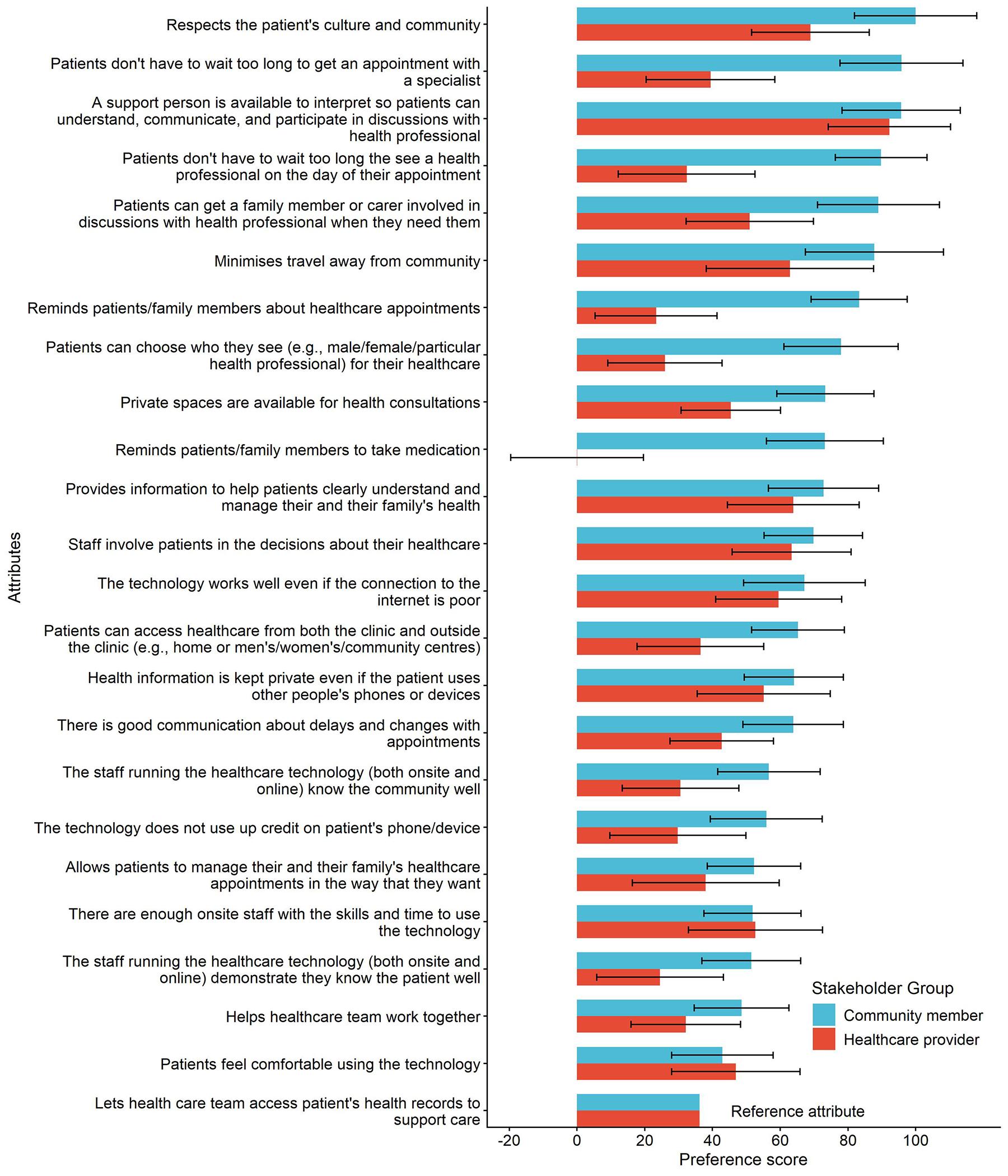 Figure 1: Preference scores (0–100) and 95% confidence intervals for attributes of digital health technology with two stakeholder groups: community members and healthcare providers.
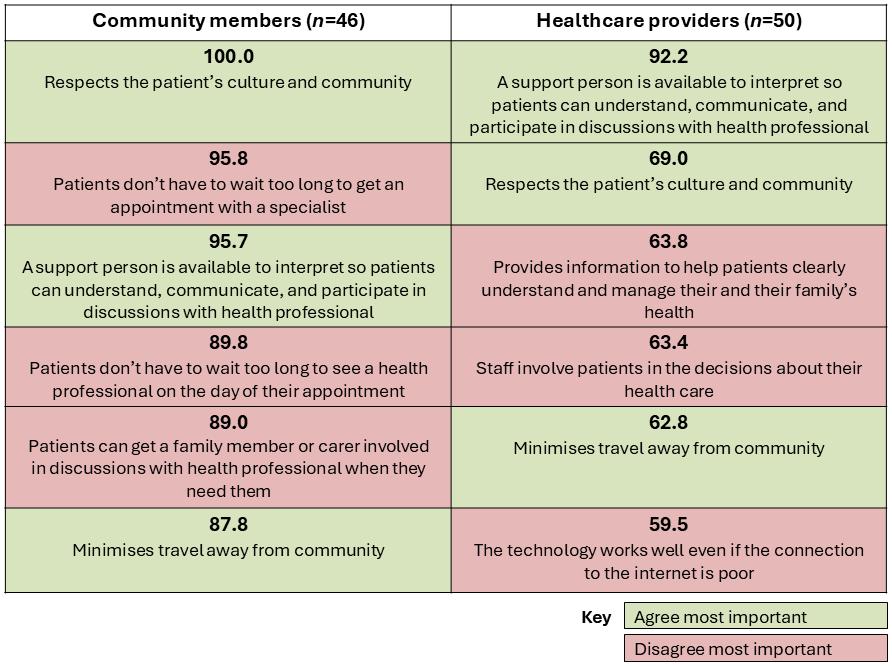 Figure 2: Top six preference scores for attributes of digital health technology by stakeholder group.
Discussion
Our study showed that both local Aboriginal community members and healthcare providers had high preference scores for having a support person available to interpret, respecting culture and community, and minimising travel away from the community. This is an important finding suggesting that any DHT initiative must, at a bare minimum, ensure these criteria are met.
A support person may refer to many roles: navigators, interpreters (not necessarily linguistic), educators, and advocates. Our results suggest that kin, community liaison, and the peer workforce play a pivotal role in the effectiveness of DHTs in primary care for remote Aboriginal communities for all stakeholders. Aboriginal community users of remote primary care clinics have reported that Aboriginal Health Workers (AHWs) bring a deeper understanding and knowledge of a community member’s personal circumstances, health needs and behaviour, and thus provide better advocacy and patient understanding when they attend telehealth appointments with patients13, and have suggested training of local community translator-interpreters to help older people with communication8. However, it was interesting that this attribute was also the healthcare providers’ most preferred attribute, supporting Aboriginal community users’ views. Despite increasing evidence that AHWs facilitate culturally appropriate care and reduce communication gaps30-32, the decline of AHWs in the NT between 2006 and 2016 was the largest of all Australian states and territories33. Retention of Aboriginal Health Practitioners (AHPs) is challenging, with AHPs employed in NT Government primary healthcare clinics declining by 61% from 2010 to 2016, following a 150% increase from an initial funding boost during 2008 to 201034. The AHW workforce is predominantly female and aging. The reasons for the decline in the workforce, especially among younger males, are many, including poor job role definition, clinical restrictions, a shift toward professional registration, and a lack of support from other health professions33,34. However, the increase in AHWs in Queensland may point to tangible steps the NT can follow, such as defining career structure with advancement pathways within the state health system and moving state-run primary care services to the ACCHS sector with well-defined models of care that support AHWs’ involvement33. The recruitment and retention of an Aboriginal workforce must be a priority for the use of DHT services for primary care in remote NT Aboriginal communities.
‘Respects the patient’s culture and community’ was an attribute selected as most important, above all others, by 100% of community members and most health professional respondents. This attribute has been reported in research as a key enabler of access to both face-to-face health care35 and telehealth14,36 for Aboriginal people. Past experiences of culturally inappropriate health services were found to deter Aboriginal men from accessing health services, instead utilising alternative coping strategies such as alcohol or substance abuse37. What is meant by respecting culture and community is summarised in practical steps in the scoping review by Moecke (2023)38. These steps include involving Aboriginal communities in the design and implementation of the digital health service, working in partnership and close collaboration with the community, iteratively consulting with community advisory boards, and building lasting relationships with community partners. Another key aspect of culturally appropriate care that has been described is the Aboriginal person feeling welcomed into the environment of the healthcare interaction. This welcoming environment is just as important as the interactions between healthcare providers and the Aboriginal person13. Our results provide strong empirical evidence that the effectiveness of any DHT service that is developed and implemented in isolation from the community will be compromised from the outset if 100% of community respondents agree that this is the most important attribute.
The healthcare service usage results in our study showed the community has a clear preference for using the clinic in their community rather than travelling to town for care. This is consistent with their preference for DHTs that minimise travel away from community. The use of DHTs to minimise travel for health care, especially for specialist appointments, is important in Aboriginal communities because travel away dislocates the patient from protective health and wellbeing factors such as family, land, and culture. It also prevents family members from attending appointments for support and collective decision-making13,14. Travelling for health care in very remote NT communities involves infrequent transportation with long delays, problems with accessing patient travel subsidies, especially for escorts, and concerns by family members for those travelling away8,37.
The degree of divergence in preferences for DHT attributes between community members and healthcare providers was notable. Some divergence reflecting the patient’s lived experience versus professional perspectives was expected. However, research on preferences generally shows more agreement in priorities between consumer and provider groups39,40. For community members, the importance of technology that reduces wait times for specialist appointments and wait times on the day of healthcare appointments demonstrates that this use case must be prioritised when investing in DHTs for very remote Aboriginal communities. The difficulty in gaining appointments and long wait times for an appointment have been reported as barriers to Aboriginal people in remote communities receiving health care8,37. Aboriginal community users of primary healthcare clinics have reported waiting times of up to 5 or 6 hours and more than what is tolerable with work and cultural commitments. Leaving without being seen due to wait times, feeling forgotten, and not being told why wait times are long are common experiences reported by these communities8. These experiences lead to health-check avoidance, presenting later in the disease course, or presenting only in emergencies, with detrimental long-term impacts on the health system. That this attribute was not considered important by healthcare providers in our survey may indicate that the time pressures experienced by patients are underappreciated by remote healthcare providers, who are themselves dealing with heavy workloads6. So while DHTs have the potential to reduce waiting times for specialist and primary healthcare appointments in remote areas by accessing a greater supply of health professionals in urban areas, it is also important that workflows for services involving DHTs are designed to improve wait times on the day of the appointment, or at the very least, not worsen them. Feeling forgotten and not being given reasons for the wait can negatively affect subjective measures of wait time; there may be a role for DHTs to communicate expected wait times more clearly to improve patient satisfaction and encourage earlier engagement with primary care. Subjective measures of patient wait time need to be measured and included in evaluations of DHT services.
The difference between the community deriving more utility from DHTs with functionality to enable family members and carers to be part of their healthcare discussions, as opposed to the healthcare providers deriving more utility from more individual-based considerations, such as the DHT providing information to help patients clearly understand and manage their own and their family’s health, highlights a differing view of autonomy between the two groups41. It also underscores the importance of the role of family connection and family support in Aboriginal perspectives of health and wellbeing1. Improving access to primary care for Aboriginal communities means improving access for the patient, with their relevant family members being present for decision-making16.
Healthcare providers’ preferences for operational and efficiency concerns that were not seen to be important for community members – for example the technology working well even if internet connectivity is poor, the privacy of health information even when patients share devices, and that there are enough onsite staff with the skills and time to use the technology – must also be prioritised in any DHT service. This is because the service needs to be acceptable to healthcare providers and consumers to ensure it is used.
That the community members provided no other attributes to consider, but the healthcare providers did, was expected, as the attribute set was based on qualitative research with community members. Completeness of community members’ attributes was the priority in this study, given the scarcity of research on the preferences of very remote Aboriginal communities for DHTs. Hence, a limitation of the study is that we did not develop the attribute set with healthcare providers. However, 17/50 (34%) healthcare providers listed other considerations, yielding a set of potentially eight additional attributes important to healthcare providers. Other limitations of the current study include the small sample size, which made subgroup analyses by age, gender, or any other characteristic impractical, and the fact that only one community was surveyed. In addition, this community may not be representative of all remote Aboriginal communities in the NT. However, many of the community’s preferred attributes align with those reported in telehealth studies from other remote Aboriginal communities14.
Many potential solutions to overcome technological barriers in very remote Aboriginal communities were identified throughout this study. These include digital upskilling training courses in the community where the value of keeping the same phone number is emphasised, developing a community technology hub (eg library, council or other public office) where people can access technologies when and as they need without having to buy a device, and the establishment of free community wi-fi to access health and other essential services, with the time of such accessibility decided by the community. In addition, digital communication methods that do not rely on changing phone numbers but instead leverage more durable contact information (eg Facebook Messenger or other personal social media accounts) can be used. It is also important that digital messages be aimed at the community rather than at individuals to achieve breadth of coverage (eg public health messages posted on social media platforms). Employing digital navigators in the community, whose role is to assist individuals in accessing the internet and devices, may be beneficial. In terms of device affordability, government practices related to device life cycle management should consider the re-use and redistribution of these devices in partnership with community organisations.
Conclusion
The findings of this study clearly show that, when designing models of comprehensive primary health care that use DHTs to optimise service delivery in very remote NT Aboriginal communities, it is of utmost importance for Aboriginal community members and healthcare providers that the service delivery models provide support persons to help patients understand, communicate and participate fully in healthcare discussions, demonstrate respect for patients’ culture and community, and minimise travel away from community for health care. The recruitment and retention of AHWs is critical to support the uptake, effectiveness, and sustainability of the DHT service. Investment in DHTs should prioritise solutions that help very remote NT Aboriginal communities better access specialist and primary care appointments and reduce waiting times on the day of appointments. In addition, given the notable differences in the preferences of Aboriginal community members and healthcare providers, it is important that all stakeholders are involved in design through implementation, monitoring and evaluation to ensure effective and sustainable digital health initiatives.
Acknowledgements
We acknowledge all project partners and participants for their time, engagement, and the valuable insights shared through interviews and ongoing discussions. Their formal and informal contributions have been central to the progression of this implementation project. We also recognise the continued guidance, wisdom, and support provided by our community-based colleagues and cultural mentors, whose perspectives have strengthened the integrity and relevance of this work.
Funding
The current project is supported by the Digital Health CRC Limited (DHCRC). DHCRC is funded under the Australian Commonwealth’s Cooperative Research Centres Program. This is a collaborative project among multiple partners in Australia: the Australian Government Department of Health, Disability and Ageing; Department of Health – Northern Territory Government; Primary Health Care Network Northern Territory; Aboriginal Medical Services Alliances Northern Territory; Healthdirect; Australia Digital Health Agency; Menzies School of Health Research; and the University of Sydney.
Conflicts of interest
The authors declare no conflicts of interest.
AI disclosure statement
The authors did not use generative AI tools or AI-assisted technologies in the preparation of this manuscript, its text, figures, or underlying data.
References
Supplementary material is available on the live site https://www.rrh.org.au/journal/article/11406/#supplementary
You might also be interested in:
2005 - Recruiting undergraduates to rural practice: what the students can tell us