



 download PDF
Introduction
Strong family networks contribute to health, resilience and support for all people1,2. In Australia, despite colonisation, forced displacement and cultural suppression, many Aboriginal families show remarkable strength and resilience, particularly in preserving highly valued family structures and varied kinship networks and responsibilities3. These networks help children gain resources and care while enabling older family members to share knowledge through an Aboriginal lens4, making families central to culture and knowledge-sharing.
Conversely, unsupportive or disconnected family relationships can negatively impact health and wellbeing5. Building strong emotional support systems and positive family relationships can promote collective healing from stressors that may influence negative dynamics, such as social, environmental and economic pressures2,6. Culturally appropriate programs help strengthen connections to family, Country, language, culture and support structures that contribute to overall wellbeing7.
To ensure effectiveness and sustainability of programs promoting health and wellbeing, it is crucial that communities, governments and organisations demonstrate long-term commitment and cultural competency2. The South West Aboriginal Medical Service (SWAMS), an Aboriginal Community Controlled Health Organisation (ACCHO), delivers a range of services across the health and wellbeing continuum in the South West region of Western Australia (WA). A key component of this work is the access and engagement team, which aims to provide culturally responsive, community-led ‘by mob, for mob’ health promotion programs, such as Moordidjabiny Moort (Stronger Families) (MMSF).
The MMSF program was a culturally appropriate health and wellbeing initiative in which families could choose, plan and undertake activities to create positive outcomes. The program ran from November 2022 to December 2023 as part of a WA Mental Health Commission community-strengthening post-COVID initiative that supported self-determination by ACCHOs. The access and engagement team made the choice to pass this self-determination onto community, and the program was delivered as part of the community liaison officer program, with consultation with Elders helping shape the program to align with community needs and priorities. This provided an opportunity to demonstrate a novel strengths-based approach involving families in the planning, implementation and evaluation of their chosen activities. The MMSF program encouraged Aboriginal families to identify a family-strengthening activity and describe anticipated benefits:
- Families volunteered to participate and were supported by access and engagement staff in the application process: outlining the activity, expected outcomes, and activity budget and reporting.
- Participating families determined, organised and reported on their activities, including spending time on country, camping, family reunions and outings.
- During the application process, the families agreed to take part in a post-activity evaluation.
Empowering individuals in this way enhances autonomy in decisions that affect their lives and social environments8,9.
SWAMS provided up to $1500 per activity, along with support for travel, accommodation, food, facilitators and guidance. SWAMS did not fund activities involving alcohol, fundraising, ticketed events, raffles, life events (eg funerals, weddings) or activities funded by other sources.
This article reports on an outcome-based evaluation of the MMSF’s approach to encourage funders to provide support for staff and programs that include Aboriginal participants in developing, implementing and evaluating activities tailored to their individual priorities/needs.
Methods
The team
The project was a collaboration between a locally based Aboriginal community liaison team member, the SWAMS access and engagement team (Indigenous Māori team manager and engagement coordinator), and non-Aboriginal university-based research staff. The family funding applications were assessed by the team to ensure diversity in family groups, drawing on local knowledge of family connections. The team supported the Aboriginal team member (who was also a community member and sometimes related to the funded families) to mitigate the cultural load of promoting the program, maintaining relationships and allocating funding.
The team's expertise in community building, action research and health promotion informed the program's design and evaluation. The lived experience of the Aboriginal community liaison team member was essential in shaping the program and engaging with the community, including supporting applications and reports. Local Elders, Aboriginal academics and health service managers provided guidance on program delivery and evaluation. The diverse perspectives within the team contributed to the rigour and trustworthiness of the research, acknowledging strengths, biases and limitations5,10,11.
Methodology
The study was an internal program evaluation and SWAMS staff research capacity-building initiative, using an evaluation design with embedded participatory action research principles. Aboriginal participatory action research enhances self-determination by ensuring community co-design and involvement at all research stages12,13. Aboriginal participatory action research aligns with Indigenous Data Sovereignty principles (hereafter, Aboriginal Data Sovereignty), which affirm the rights of Indigenous Peoples to regulate, collect and control data about their people, communities, resources and lands14. This approach was grounded in self-determination, allowing for Indigenous priorities, values and cultures to be reflected in data collected on or about Indigenous Peoples. The evaluation of the program also functioned as a research capacity-building opportunity for SWAMS, providing the community liaison officer with experience in developing the evaluation, data collection and data analysis.
Participants identified hoped-for outcomes from their chosen activities in their applications, and these became evaluation indicators, aligning with the Aboriginal Data Sovereignty principle of ‘governance of data’15,16 and informing the program logic model (Fig1) that connects inputs, strategies, outputs, and short- and long-term outcomes7. Each family activity embedded a ‘micro’ logic model, connecting planning to expected outcomes. While logic models are linear and limited in capturing complex social dynamics, they provide a useful framework for impact measurement and knowledge translation. Given resource constraints, only short-term outcomes were evaluated.
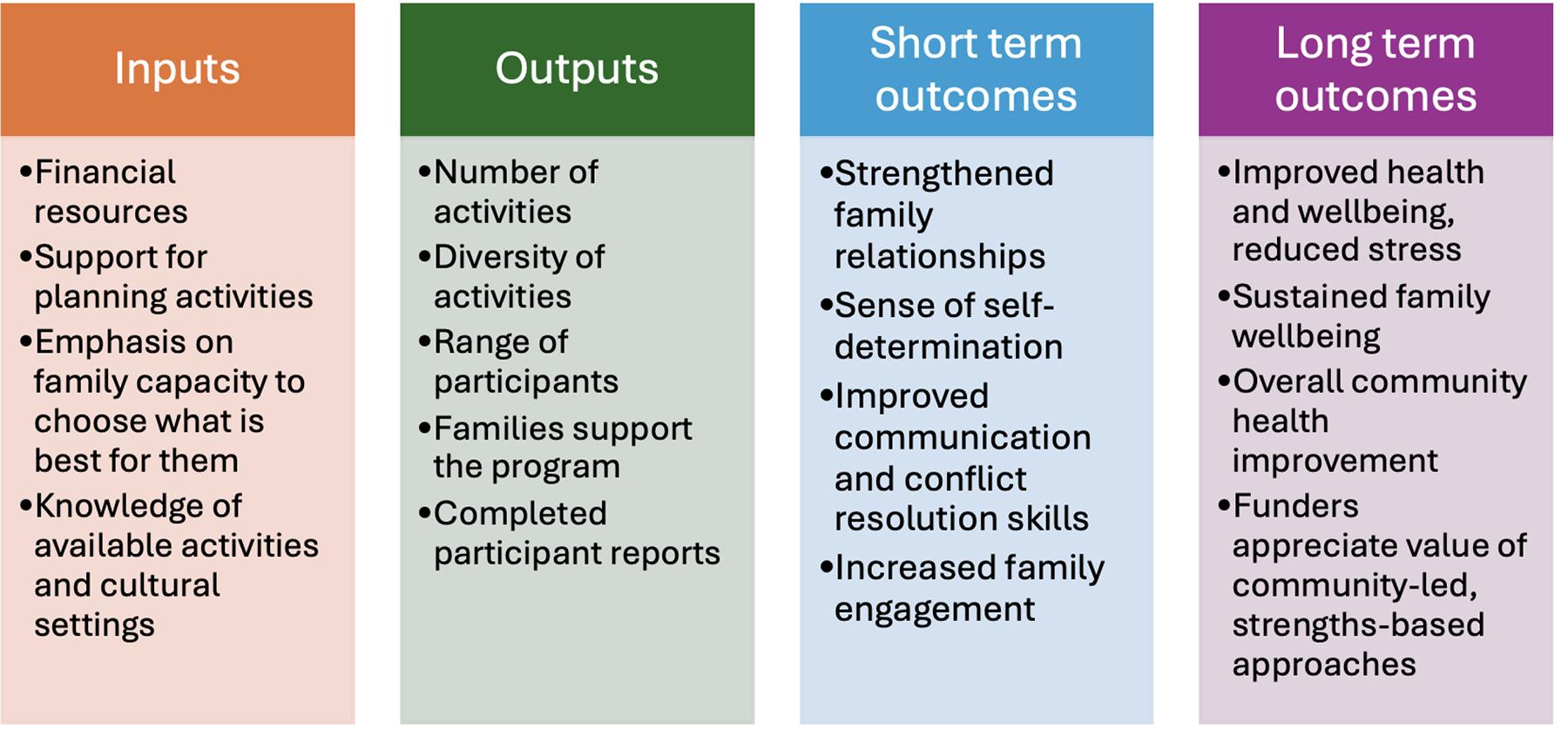 Figure 1: Moordidjabiny Moort (Stronger Families) program logic.
Data collection
A Microsoft Excel database recorded activity details, including participant numbers, ages, application processes, purposes and types of support. The application form included a reporting template addressing whether anticipated outcomes were achieved, as well as key learnings and success stories. While reporting was a mandatory funding requirement, participants varied in the extent to which they provided comprehensive information (eg ‘number of children’ was not always provided). After activity completion, a subset of applicants responded to the invitation to participate in follow-up yarning circles or individual yarns17 to discuss their experiences related to outcomes, enablers and challenges. Access and engagement staff had ongoing contact with some families as part of their service delivery roles and could provide observations regarding sustained program impacts.
Analysis
An analysis of the yarning circles and individual yarn transcripts was conducted by the community liaison officer and academics to determine themes emerging from the data18. The quantitative data were analysed using simple descriptive statistics. To preserve anonymity, participant quotes are identified by an assigned family group number, or as part of a participant report, or as being from a yarn or yarning circle.
Ethics approval
This evaluation was part of the ‘BothWay Learning: Aboriginal Community-Led Action Research’ project, approved by the WA Aboriginal Health Ethics Committee (Human Research Ethics Committee no. 1112). Data collection was conducted as an internal program evaluation. Participant consent was implied through signed program funding agreements, which included commitments to reporting and participation in yarning circles or individual yarns to share their experiences as part of the evaluation19.
The evaluation adhered to ethical principles, ensuring participant privacy and confidentiality. Findings were anonymised, with oversight from local community leaders, including SWAMS staff and board members. Underpinned by the National Health and Medical Research Council’s six core values for conducting ethical research in Aboriginal communities20, the evaluation reflected principles of empowerment, self-determination, and shared decision-making, with community members as co-creators of knowledge. This aligns with the Aboriginal and Torres Strait Islander Quality Appraisal Tool21, ensuring research is strengths-based, beneficial and meaningful22. The approach also meets community expectations for Indigenous governance and participation in research, reinforcing the values of community-controlled organisations23.
Results
The 28 participating families included 428 adults and 139 children, who were involved in 29 activities. The participants included Aboriginal people living in the South West region of WA: Narrogin, Katanning, Mandurah and surrounding towns. Twenty-six participant reports were completed, 15 participants volunteered to attend a yarning barbecue evaluation event and three individual yarns were conducted, each lasting approximately 45 minutes.
Activity type and purpose
Table 1 shows the range of nominated intended purposes for the activities.
The types of activity in which families participated related to learning about culture (10), connecting to Country (5), family get-togethers (5), family reunions (3) and family outings to fun destinations (2).
Table 1: Activity purposes identified by project participants
|
Purpose† |
Number of families identifying this purpose |
|---|---|
|
Having fun together |
13 |
|
Being stronger together |
12 |
|
Knowing family roots |
10 |
|
Knowing culture |
10 |
|
Learning together |
10 |
|
Teaching respect |
1 |
|
Connecting with Nan/grandmother |
1 |
† Families could choose more than one purpose for each activity.
Thematic analysis
The thematic analysis indicated both planned and unanticipated benefits; that is ‘some didn’t realise until they had the event that it was going to be good for that child’ (access and engagement team member). Overarching support for this program was reflected by yarn group participant comments that ‘family time is our time’, ‘we are always connected to others; we are never alone’ and ‘it was very exciting and wholesome’.
Self-determination
A unique feature of this project was that families decided on their own family activity and identified what they hoped would be the family-strengthening outcomes. Some families were initially surprised at having this freedom and needed encouragement to choose their activity and trust that they are the experts.
The access and engagement staff supported the families in their decision-making, reporting that ‘some people had a lot of questions about what they were allowed to do’. The access and engagement team members reassured the families that, if the purpose aligned to the hoped-for family-strengthening outcomes, ‘it’s up to you’ (access and engagement team member). The access and engagement staff reflected that this application process supported families to ‘not be shamed, not having someone say oh no you can’t do it like this, it gave them that freedom, that option to be responsible’. And ‘some were shame at first, they felt shame taking money, but [this changed] when it was explained they had ideas [their own ideas] for family activities’ that they should trust their thinking (access and engagement team member).
Connection strengthens families
Participant families described the activities as fostering family connection, strengthening or uniting the family circle. ‘We sat together as one family ... united we stand and divided we fall’ (participant yarn/yarning circle). Strengthening family connection is important for ‘knowing we are there for each other when needed’ (participant yarn/yarning circle).
Some families planned activities that brought together family members after long separations. These reunions enabled some families to heal estranged relationships, for example ‘family made up and [are now] speaking and healing after many years’ (family 1, participant report).
Other families reconnected and strengthened relationships affected by child removal policies: ‘Growing up in the DCP [Department for Child Protection] system, taken away from his mother, and siblings separated into different homes so he doesn’t see them. She used the funding to make a time to catch up with them’ (participant yarn/yarning circle).
Some family activities provided an opportunity for family members to meet for the first time, ‘going to team sporting events is a chance to meet other family haven’t met before’ (participant yarn/yarning circle).
A chance for families to do something different together
The support for family-strengthening activities prompted families to spend time together outside their usual ways of being together. This was seen as especially important for busy parents: ‘busy working mothers find it hard to make family time away’ (participant yarn/yarning circle) and ‘otherwise, we would have been at home with kids on devices, in their rooms’ (participant yarn/yarning circle).
Families successfully engaged youth and introduced them to new activities, for example ‘she went on a weekend away with her 14-year-old son, it was their only time together alone since his Dad passed six years ago’ (participant yarn/yarning circle). This was particularly significant when cultural activities were included, such as ‘showing kids how to do things they hadn’t experienced before like camping, catching marron’ (participant yarn/yarning circle).
Building positive family memories
Families frequently described only connecting and reuniting through sorry times, such as funerals. The families appreciated the opportunity to create happy and fun memories rather than only gathering during difficult times: ‘Build up good memories, builds resistance [resilience] when times are not so good’ (participant yarn/yarning circle).
Practical assistance
Financial support was essential to enabling families to spend time together. This unique feature removed financial barriers to family activities: ‘It helped families out so much with the cost of living … just went out, so good to not be stuck at home’ (participant yarn/yarning circle). The financial support also meant that the families could fully enjoy the experience; it was ‘good to have stressless time with food taken care of’ (participant yarn/yarning circle).
Going out on Country
Many families chose to go out on Country, which fostered identity, connection and belonging: ‘This experience was Mooditj [good]. Koorlangkas [children] loved connecting to Country’ (family 4, participant report). Being on Country provided opportunities for cultural education and family history, particularly for children. This was ‘a good time to tell kids about family history, a history not taught in school’(participant yarn/yarning circle).
A space to address family conflicts
The change of setting allowed for constructive conflict resolution in a culturally safe way: ‘We were arguing … we got sworn at, but she realised that the people around the fire that night were the only people that’s there for her … if you had that conversation when you were not camping the police would’ve come out and shut it down, that’s how loud it was. And she couldn’t just walk away, she was stuck there, we let her speak about how she was feeling, that could only happen camping, otherwise she would have drove off, or hung up the phone’ (participant yarn/yarning circle).
Knowledge sharing
Family activities provided the space and time to share cultural knowledge, stories of their pasts, and skills: ‘Knowledge was passed down to kids, I can only tell my kids now about the reserve that I grew up visiting, camping with other families’ (participant yarn/yarning circle).
The families taught traditional practices such as fishing, hunting, swimming and cooking: ‘Her son has never been fishing or marroning, it was the first time for the father to teach his son’ (participant yarn/yarning circle). It is important that ‘the kids have the knowledge of how to do the skills of providing food and water’ (participant yarn/yarning circle).
Encouraging non-technology activities for children
The activities provided a chance for children to enjoy technology-free activities. Families were surprised at how quickly children were free of devices: ‘[the] first night kids asked for devices, after the second day they were fine, they didn’t even ask’ (participant yarn/yarning circle). This was significant as ‘we all felt closer to the Country and just to show my son there is more to life than technology’ (participant yarn/yarning circle).
Some participants mentioned that after their family activity, the children continued to engage in more non-technology related activities with family members and on their own: ‘Children becoming more active outside and not stuck in front of the television/iPad/phones’ (family 7, participant report) and ‘the boy is now outdoors on his bike, not inside on devices’ (participant yarn/yarning circle).
Discussion
The MMSF program used flexible, short-term funding that enabled delivery of a program where families determined their success measures, and supported a strengths-based, culturally led approach by SWAMS. Through this flexibility, the evaluation demonstrated how applying an approach embedding self-determination and empowerment contributed to program success. Healing and connection, improved health and wellbeing the importance of self-determination and the value of connecting purpose, planning and evaluation were key learnings from the program.
Healing and connection
The MMSF program showed that activities provided a space for families to reunite and heal through yarning, bonding and being together. This aligns with other activity-based family wellbeing programs like Yarrabah’s Family Wellbeing project24. Similarly, the MMSF program found that family activities helped manage conflicts7. While long-term follow-up with participants was not possible, staff observed sustained changes in some families with whom they had ongoing connections.
Wellbeing
The program highlighted the importance of strengthening wellbeing through activities such as connecting on Country, learning from Elders, and hunting expeditions. Cultural practices are key determinants of Indigenous wellbeing6. Transferring cultural knowledge and fostering meaningful relationships between Elders and younger generations supports a stronger cultural identity in children6. This cultural connection helps build resilience in children facing challenges like discrimination6.
It is important for Aboriginal people to have a comfortable space for intergenerational knowledge transfer and cultural identity formation, particularly for those who did not grow up in Culture and cultural environments25. The MMSF program provided an opportunity for people to explore connecting with Culture, strengthening belonging and resilience.
Self-determination
Freedom of activity choice embodied a strengths-based approach that met families’ unique needs and aspirations. Historical events have created mistrust and disengagement. Colonisation stripped Aboriginal people, especially men, of their roles, responsibilities and authority. Having the trust and freedom to decide family activities helps restore cultural authority, reclaiming decision-making powers and contradicting imposed internal deficit narratives. By delivering a culturally safe program, MMSF began to build trust, respect and involvement.
Self-determination is a key cultural determinant of Indigenous health6. When Aboriginal people contribute to program design and delivery, significant positive outcomes result26, shown here by building community capability in writing applications and reports, and in planning, implementing and evaluating events. Self-determination was also embedded in data collection methods14
Comprehensive primary healthcare challenges
Health services striving to apply comprehensive primary healthcare principles often face systemic funding constraints, impacting staff capacity and reporting requirements, which are limited to funder-determined outputs. Additionally, short-term funding models are misaligned with comprehensive primary healthcare priorities for long-term and continuous community engagement27 and are often barriers to hiring permanent, qualified health promotion staff or covering outcome-based program evaluation28.These constraints are not simply administrative challenges, they reflect broader Western/colonial funding structures that undermine Aboriginal self-determination and limit the capacity of services to embed cultural safety across programs and workplaces. An evaluation approach drawing on participants’ intended outcomes provided evidence of how and why the program was successful, and demonstrated how community-defined measures can produce meaningful evidence of impact.
Findings from this evaluation can inform decolonised funding models that give ACCHOs and communities greater autonomy in delivering and evaluating programs using methods and outcome measures of their choice, reflecting Aboriginal priorities, values and cultural authority. Such models should be also supported with funding for research capacity-building and dedicated research staff. In addition funding cycles need to allow for adequate planning, relationship-building and governance processes. The project identified barriers caused by short-term funding of similar programs, including added costs, organisational demands, Aboriginal staff cultural load and limited planning time. Longer term, flexible funding would reduce these pressures and support ACCHOs to uphold comprehensive primary healthcare principles in ways that are culturally safe, community-led and aligned with Aboriginal Data Sovereignty.
Conclusion
The MMSF program was a culturally appropriate, self-determined health and wellbeing program in which families were encouraged to choose, plan and undertake an activity with the intention of creating positive outcomes for their family. The evaluation showed that activities restoring cultural authority and cultural responsibility supported healing, connection, and improved health and wellbeing.
Additionally, connecting purpose, planning and evaluation highlighted the application of Aboriginal Data Sovereignty ‘governance of data’ principles. Research confidence and capacity was built by having the flexibility to determine program evaluation and allocate staff to an outcome-based evaluation. Both the organisation and the families were able to choose how the project would be implemented, thereby ensuring the needs and priorities of those involved were identified and met. The results demonstrate the Aboriginal Data Sovereignty principle of ‘data for governance’ because evidence from the evaluation can be used to advocate for long-term funding models to employ continuous, qualified Aboriginal health promotion staff skilled in outcome-based program evaluations.