


 download PDF
Introduction
Healthcare organisations' engagement in research and investment in enhancing research culture has been linked to improved quality of care, including better patient outcomes and more effective care processes1,2. However, engaging in research may be particularly challenging for rural health services because of a limited number of rural researchers, high workloads, lack of organisational support, and lack of targeted research grants and scholarships for rural researchers3-6. Additional barriers to sustainable rural health research include a lack of recognition for rural research, professional isolation, and limited career progression opportunities7. Brown et al4 and Alston et al6 also highlight that there is limited research on the resources required and potential approaches to developing and sustaining a research team in rural settings. Strategies identified to address some of the challenges to undertaking rural health service research include establishing dedicated research support roles within organisations, and fostering networks and collaborations to enhance research capacity3-5,7. An additional yet underexplored component of these strategies is hosting student researchers in the health service setting.
Student research placements can be understood as work experiences of a predefined duration that are undertaken off-campus within an organisation as part of a professional degree and in which students undertake research. Offering student research placements in rural health services may contribute to fostering research culture and capacity, aligning with principles for research capacity building as outlined by Cooke8, including the development of skills and confidence, strengthening collaborations, and embedding research ‘close to practice’. However, the literature on health research placements – particularly within rural health services – is limited. A recent systematic review identified only 11 studies examining the extent, viability, and outcomes of student research placements, with just five set in health services (geographic locations were not reported)9. The review found that most of the studies focused on student-centred outcomes, such as research skills and abilities, whereas outcomes for hosting organisations, and outcomes related to research impact were significantly less reported9. Another recent study set in urban Queensland, Australia, did report promising outcomes of allied health student research projects from the health service perspective10. These included healthcare performance improvements (eg provision of evidence to support practice change, peer-reviewed publications) and increased research capacity (eg research skill development in staff, strengthened collaborations)10. However, this study was limited to a single health service in a metropolitan area, highlighting the need for further investigation in the rural setting.
In contrast, much of the academic focus has been on clinical placements (eg nursing, medicine, allied health), with some attention to rural settings. For instance, Green et al undertook a scoping review exploring indicators of quality student placements in rural settings11. The authors included 101 academic publications about rural health placements, all of which related to clinical placements. Their work emphasised that determinants of placement quality differ between urban and rural contexts11. Extrapolating from these findings, it is likely that rural health research placements require tailored planning and implementation strategies. Unfortunately, approaches and strategies to successfully and sustainably implement student research placements in rural health services are currently poorly understood.
Overall, there is a significant knowledge gap regarding the strategies and resources required for implementing student research placements in rural health service settings. As such, this study’s first objective is to address this gap by exploring key motivations, barriers, enablers, benefits, and burdens of hosting student researchers from the perspective of rural health service staff. The study’s second objective is to use these findings to inform the development of an implementation support tool to assist rural health services in becoming hosting organisations. The outputs of this research will support rural health services seeking to build research culture and capacity through student research placements, contributing to broader efforts to enhance rural health research and service delivery.
Methods
1. Exploring perceptions and experiences of hosting student researchers
This study adopted a qualitative exploratory design incorporating semi-structured interviews with individuals who have responsibility for increasing research capacity, delivering research outcomes, overseeing research or student placements, or have previous involvement with research placements in rural health services in Victoria, Australia (eg research directors/managers, department managers, allied health research leads, research translation roles). Having experience with hosting or supervising student researchers was not a prerequisite for participation. The study’s geographic limit was pragmatic, based on the research team’s capacity. For the purposes of this study, ‘rural’ was defined broadly as Modified Monash (MM) classifications 2–512, which includes regional centres through to small rural towns, with variation across these categories in population size, proximity to larger centres, and associated workforce, infrastructure, and service access. Metropolitan or remote area health service staff members (MM 1 or MM 6–7) were excluded. Students were defined as undergraduate and graduate students enrolled at a university in a health science discipline (eg public health, biostatistics, medicine, nursing, social work, physiotherapy, dietetics). PhD students were excluded due to the generally longer duration of these placements. As this study’s objective was to capture the health service perspective, student researchers and university staff were also excluded.
Convenience and snowball sampling were used to recruit participants. The initial recruitment target was 10 individuals, with no more than two participants per rural health service to avoid over-representation. Participants were initially recruited from the research team’s professional networks as the professional contact details were already known. Potentially eligible individuals were contacted by email with an invitation to participate in the study. Irrespective of their decision to participate or not, individuals were asked if they knew of other potential participants for the study. If so, they were encouraged to obtain these potential participants’ permission to share their contact details with the research team.
Interview guides were developed using normalisation process theory, with questions reflective of the theory’s four mechanisms (coherence, cognitive participation, collective action, reflexive monitoring) influencing intervention implementation13,14. Normalisation process theory was chosen as it encourages reflection on the unique contexts in which implementation occurs and helps identify and explain the processes involved in intervention implementation and integration13,14. The interview guides also included demographic questions about educational background and experience working in rural settings. The guides are available in Supplementary text 1, with reference to normalisation process theory mechanisms indicated next to each question.
Participant information and consent forms were emailed to individuals expressing interest in participating in the study. Participants were asked to attend a one-on-one semi-structured interview on Microsoft Teams, lasting approximately 45 minutes, at a time convenient to the participant. MC and JB conducted the interviews. MC is a registered nurse (Master of Public Health) working in a research translation coordinator role; JB is a pharmacist (PhD) working in a quality and safety executive role. Both investigators have previous experience in qualitative methods and conducting interviews. Prior to commencing interviews, investigators undertook a reflexivity exercise and discussed their answers to identify any potential biases. As convenience sampling was used in this study, participants were made aware of the current professional positions held by the researchers and the rationale for their involvement in the study. Pairing of the interviewer and interviewee was done purposely in a way to minimise interactions between individuals with prior or ongoing relationships.
Interview recordings were transcribed verbatim and de-identified. Data were analysed using reflexive thematic analysis following guidance by Braun and Clarke15,16. Consistent with this approach, thematic analysis was treated as a flexible and iterative method involving a series of analytic decisions regarding coding, theme development, and interpretation15,16. An initial coding framework was developed based on interview questions (Supplementary text 2), including categories such as motivations, barriers, enablers, benefits, and burdens, to provide a starting point for analysis rather than a fixed coding structure. Coding involved a recursive process, moving between deductive (question-driven) and inductive (data-driven) approaches, allowing both anticipated and unanticipated insights to be captured15,16. Microsoft Excel was used to facilitate data analysis. Coding was done by two researchers (MC and JB or JR) in parallel for 20% of the transcripts to ensure consistency. The remaining 80% were coded by one researcher only (MC or JR). A summary of findings was provided to all participants as an opportunity to review and comment on the content, ensuring their input was adequately captured.
2. Developing the implementation support tool
The Quality Implementation Framework17 (QIF) was selected as a guiding framework for the development of the implementation support tool, which was used in conjunction with the Getting to Outcomes guidance by Wiseman et al18, as recommended by the authors of the QIF19. Following a literature review of implementation science frameworks, the research team chose the QIF due to its applicability to various implementation settings and intervention types and its focus on the practicalities of implementation, providing action-oriented, systematic, and pragmatic planning for successful intervention implementation17.
Within the QIF, central components include the host setting, the innovation, and implementation teams17. In this study, the host setting is considered to be rural health services, the hosting and supervision of student research placements is the innovation, and health service staff and partnering university staff are the implementation teams. The findings from the semi-structured interviews, in combination with the research team’s extensive professional experience in rural and regional health services and research expertise, were used to inform and adapt the QIF for the study’s context.
Ethics approval
This research project received ethical approval from Grampians Health & St John of God Hospital Ballarat Human Research Ethics Committee (reference RVIC/106544/GHSJOG-2024-428400). Verbal and written consent was obtained by all participants prior to interviews.
Results
Following 37 invitations from the research team, nine individuals responded positively and participated in the interviews. An exact response rate could not be calculated due to the nature of snowball sampling. All interviews were held by videoconference and lasted between 28 and 68 minutes. Seven participants had previous experience in hosting student researchers, and two did not. The nine participants worked across seven rural or regional Victorian health services (MM 2–4), with no participants from MM 5 locations. During the member-checking step, two participants contributed additional information to the results, and one participant was unreachable due to a change in contact details.
Table 1: Participant characteristics (N=9)
| Characteristic | Variable | Frequency |
|---|---|---|
| Educational background | Physiotherapy | 3 |
| Medicine / medical administration |
2 |
|
| Agricultural sciences |
2 |
|
| Dietetics |
1 |
|
| Information management |
1 |
|
| Time working in rural and/or regional setting (years) | <5 | 3 |
| ≥5 |
6 |
|
| Current health service size (staff number) | 500–1000 | 4 |
| >1000–5000 |
3 |
|
| >5000 |
2 |
1. Rural health service staff perceptions and experiences of hosting student researchers
Placement and project examples
Among health services hosting student researchers, placements varied in length from approximately 3 weeks to 6 months. Most were described as hybrid placements, though site visits tended to be minimal and the work undertaken by students was primarily through virtual means. Participants reported hosting mainly honours or graduate-level students from either a clinical discipline (eg social work, speech pathology, nursing, physiotherapy) or public health. Many participants cited hosting mainly mature-age students (eg with families and other professional commitments). Most participants also reported that students were ‘coming from away’ (ie they did not reside in the local area).
Assigned student work generally consisted of discrete tasks, often as part of the organisation’s larger body of research work. Examples of student projects included creating and/or updating online resources, contributing to developing a research protocol, assisting with data collection (mainly quantitative but occasionally qualitative), data management and cleaning, data analysis, literature reviews, tool development (eg surveys), conducting local audits, and contributing to a manuscript for publication.
Motivations to host student researchers
Participants tended to report motivations from an organisational perspective; however, some discussed individual motivations to host student researchers. Outlined organisational motivations included the potential for enhancing relationships with universities, gaining additional health service research capacity, staff recruitment and retention, providing students with rural health experience (that might encourage future consideration of rural practice), tangible and useful outcomes for the health service, and fostering a health service culture of evidence-based practice. On a more individual level, participants discussed their enjoyment of mentoring, providing students with a positive learning experience, and fostering critical thinking skills in students on research placements.
… we try to bring resources into our underfunded research unit and even though there's work involved, obviously with having students, part of it is just building the volume of activity and so they are a resource. (participant 4)
I do think there's a lot of value to have students come out in a really dedicated way and look at meaningful research topics. And then go, actually this might be somewhere that I want to live. (participant 7)
Facilitators and barriers to hosting student researchers in rural health services
Key factors were identified during the analysis that facilitated or presented barriers to rural health services seeking to host or currently hosting student researchers.
Relationships with universities was a dominant theme throughout the interviews. Pre-existing university affiliations, positive relationships (characterised by, for example, good communication, transparency, trust, reciprocity, support), and universities providing primary supervision were commonly identified facilitators. Additional facilitating factors were having the ability to extend student agreements already in place (eg those for clinical placements) to cover research placements, and having universities provide specific research training and access to research tools and software that were not readily available in rural health services. Barriers identified at this level included differing expectations between universities and health services about the placements, and health services having to navigate varying placement processes when working with different universities.
... the universities that are wanting us to take their students, to do the research, that's got to be a really good relationship, and you have to really trust each other, and it's got to be reciprocal. (participant 6)
I think there's a bit of misunderstanding or uncertainty between the universities and health services … There are laws and protocols around accessing health information and has to be handled very sensitively. (participant 4)
But in my experience, I've been feeling that, with [University X] it's been good, but with other [universities] we've had conversations with, it's been a lot left to us to, to develop. That's why it hasn't developed … with any other [universities]. (participant 7)
Health service capacity and active research projects was another central theme. Prerequisites to hosting student researchers identified by participants included staff availability (preferably with flexible schedules), expertise, time, and potential backfilling during supervision-related tasks. Having available office space was perceived as a facilitator, along with having existing research infrastructure (eg research roles) and health-service-led projects (which facilitated placements when small tasks within these projects could be assigned to students). Not having these elements in place was perceived as a significant barrier to hosting student researchers.
… having it health service driven cause otherwise it's a lot of work for not much return. It's really gotta meet the health service needs. (participant 6)
Obviously, to be able to host a student, you need to have the time to be able to dedicate to the student and their project. And I think that could be a bit challenging. (participant 3)
Experience with research placements was considered another influential factor. From the health service side, previous experience hosting students (onsite and virtually, and at both the organisational and individual levels) was seen as a facilitator, whereas inexperienced health services described a lack of understanding of research processes, which hindered opportunities for hosting.
In a lot of places, there's nobody there to champion it, who actually has any experience doing research and understands what that actually means and could act as a mentor or supervisor in that space and it's a new sort of idea. (participant 5)
Additionally, lack of health service staff experience with supervising research placements was identified as a limiting factor. On the university side, some participants related how academic teams’ inexperience with rural health service research was a barrier.
Organisational and individual perceptions and expectations often influenced the decision to host or the experience of hosting. At the health service level, a significant barrier to hosting student researchers was the perceived risk outweighing the potential benefits. Concerns included the varying skill levels of students, the time required to support them, and the loss of clinician time, contributing to doubts about whether the outputs would justify the investment.
I’m not giving [the students] a project that's essential to my work … (participant 1)
So in smaller rural areas. There's still that idea around research that it's something that takes up so much time and it's something that you've got to come in with a massive idea and you've got to have all this stuff. (participant 5)
Individual-level facilitators within this theme included not having high expectations about student deliverables, being flexible with students, and having clear expectations around supervisory responsibilities.
Other themes relating to barriers and facilitators to hosting student researchers included health service culture (eg having executive and management teams value and support research activities versus health services with limited interest in quality improvement or evidence-based practice initiatives), the availability of resources for students, such as student accommodations, and the lack of incentives for both health services and students (eg financial compensation for student researcher supervision, and incentives for student researchers to choose rural over metropolitan placements). Minor themes identified included the increased prevalence and acceptance of virtual work modalities and the availability of local ethics committees (with an understanding of rural health service research contexts) as facilitators to rural health service teams hosting student researchers.
… our funding is only to clinical placements. So therefore, we have to provide our accommodation in kind, or if we provide any financial support that has to be through other means. We don't get any funding for it … And that's why we can't ... I don't want to ask these students also to come out and spend more time regionally because they're paying their own fuel sometimes coming out and doing all the above. (participant 7)
Reported benefits and burdens of hosting student researchers
Participants described both benefits and burdens associated with hosting student researchers in rural health services. At the individual staff and research team levels, reported benefits included strengthened partnerships with universities, increased research capacity to advance local projects, and the opportunity to benefit from student skill sets. Some staff valued the experience as a way to refine hosting processes and develop mentoring skills for career progression. However, participants also highlighted several burdens, including the need to comply with university placement requirements, significant time investment, and the responsibility of supporting students through challenges. Managing expectations (from both students and universities), navigating ethics requirements (eg amending applications to include students), balancing student projects with internally led research, and handling data management responsibilities also represented significant burdens.
When I think of the undergraduate students, there's always issues around communication and thinking that things will move a lot more quickly than they will. (participant 1)
So it [the placements] can be very admin heavy because there's additional requirements. Because you are the location task supervisor, but there's a bunch of meetings that need to take place and reports and sign offs that have to happen per student. From the actual school that they're with. (participant 9)
At the organisational level, participants viewed student placements as a potential workforce recruitment strategy for the health service and as an opportunity to showcase local projects. They also related that hosting student researchers could contribute to better collaboration across disciplines and helped build a stronger culture of research and evidence-based practice. Despite these perceived benefits, participants often mentioned the burden of risk associated with student projects, including the health service’s accountability, cybersecurity vulnerabilities, and the management of sensitive data.
And again in the regions, it can be hard to find people, so in some ways it's a great avenue for recruitment … (participant 1)
… when they're [the students] actually interacting with staff and they're accessing records and doing things like that we need to have our governance at our end. We need to follow our own procedures rather than just say, well, the university ticked off on it so it's okay. (participant 4)
At the student level, participants described how research placements provided an opportunity to expose students to the realities of rural health practice while also building their research skills.
It gives the students an opportunity to have insight to a regional health service and how unique that is compared to a metropolitan health service. It gets them to look at it through a different lens, and it also can encourage them that, collaboration is really important, that we often need to work with larger centres to achieve what we want to achieve. (participant 2)
2. An implementation tool for rural health services
The findings from the semi-structured interviews were used to inform and tailor the QIF’s four implementation phases17. The full tool developed by the research team involves a series of prompts and considerations for rural health services looking to host student researchers. In total, 11 steps across the QIF’s four phases are outlined. These can be found in Supplementary text 3. Figure 1 summarises the main considerations and actions in each phase. In phase 1, rural health service staff are encouraged to consider the expected benefits of hosting student researchers, and to assess if they have the prerequisite organisational climate and resources for hosting, highlighting critical elements and providing suggestions for building capacity and readiness. In phase 2, three steps with key considerations for building student placements into routine operations are outlined. Phases 3 and 4 focus on evaluation and dissemination of implementation and placement outcomes in order to improve future iterations.
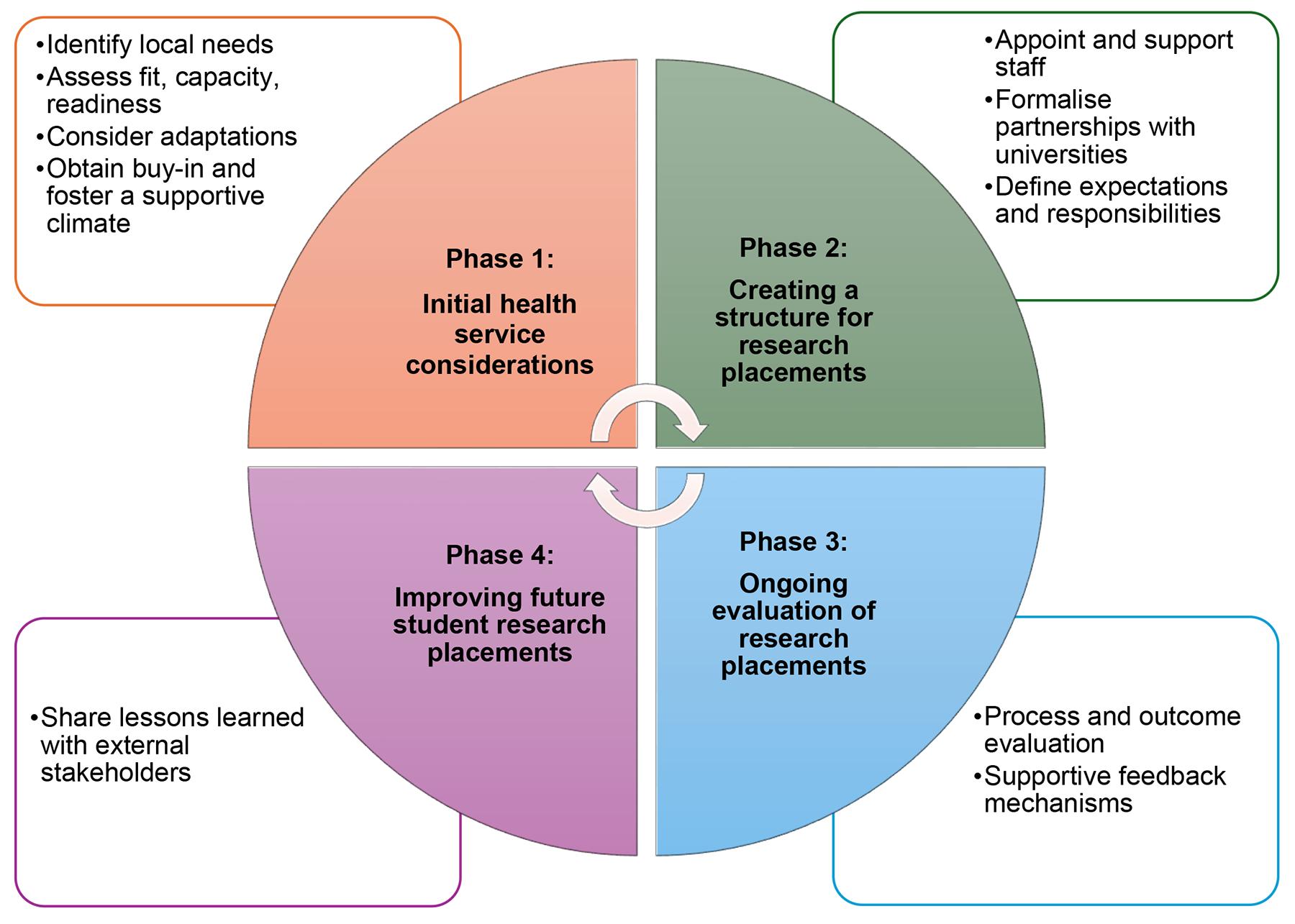 Figure 1: Overview of the implementation support tool for rural health services considering becoming host organisations. (Adapted from the Quality Implementation Framework by Meyers et al17.)
Discussion
While research engagement has been linked with improvements in quality of care, rural health services face unique challenges that may limit research activity. This study provides insight into the previously underexplored health service perspective on student research placements9 and addresses a critical gap in understanding how rural health services can implement and sustain student research placements to build research culture and capacity. Findings from the nine semi-structured interviews with Victorian rural health staff highlighted key motivations, including strengthening university partnerships and supporting workforce recruitment. Furthermore, facilitating factors were identified and included positive relationships with universities, existing research infrastructure, prior experience with student researchers, and perceptions of the required resources and of potential placement outputs. Barriers such as limited staffing, university expectations, and a lack of incentives were also discussed. While benefits such as increased research capacity and workforce development were noted, burdens included time investment, compliance with university requirements, and data security concerns. Despite challenges, placements were valued for exposing students to rural health realities and fostering future research engagement. This study has drawn on these findings to build a practical implementation tool to support rural health services in setting up student placements.
There are limited studies from which to draw direct parallels, however, Menzies et al20 and Angus et al10,21 offer some insights. These studies reported on the implementation and outcomes of clinical students assigned to research placements in metropolitan health services in the UK and Australia, respectively10,20,21. Despite the difference in settings (rural v urban), several findings align. An important point to draw from these similarities is the mounting evidence that student research placements can contribute to health services building research culture and capacity, consistent with Cooke’s principles of research capacity building through skill development, linkages and collaboration, and practice-based research activity8.
As was demonstrated in the present study, Menzies et al20 and Angus et al10,21 found that student contributions helped advance health service research projects (including funding and grant applications)20, increased staff capacity in terms of time to engage in research, knowledge, and skills (eg learning about different research methodologies)10 and encouraged a culture of evidence-based practice (eg through clinical service and practice development or change)20. Additional organisational benefits found across the studies included strengthened partnerships with universities (eg through the extension of health service–academic research collaborations)21 and new pathways for staff recruitment and retention (eg clinical students applying for positions within the health service after completion of their research projects)20. A number of common barriers and burdens were also reported in the studies, notably the associated increase in workload for staff supervising students, mismatched expectations and communication challenges between health services, universities, and students (eg in one study, some clinicians felt their expertise was undervalued by academic teams)10, and varying levels of student capabilities with repercussions on staff time and the progress of projects10,20,21.
These commonalities suggest that flexibility and adaptability, investment in building relationships with university partners, structured support systems for staff and students, and alignment of expectations about project outcomes and supervision responsibilities are key considerations for the success of student placements. Drawing again on Cooke’s framework for research capacity building8, these factors also highlight the importance of supportive infrastructure (eg protected time and backfill arrangements) and the development of strong, trust-based relationships between stakeholders. The common facilitators reported in the studies also provide reflection points for health services and include the availability of dedicated research staff with interest in supervising students, and the alignment of placements with health service values, priorities, and goals10,20,21.
While our study aligns with those of Menzies et al20 and Angus et al10,21 in identified benefits, burdens, barriers, and facilitators of student research placements, key differences emerged in the rural health service context. Unsurprisingly, barriers unique to the rural health service setting encompassed limited research infrastructure, including fractional research positions, limited access to research specific funding, resources (eg research or content expertise), tools (eg computer software), and lack of financial incentives for students and organisations, notably student travel allowances and additional compensation for supervision. Additionally, the predominance of virtual and hybrid placements in rural settings stood in clear contrast to urban placements. This finding appears to contradict participants’ emphasis on the importance of exposing students to rural health realities, as students in these placements often had limited direct engagement with rural communities and health services. The continued reliance on these remote modalities likely stems from the COVID-19 pandemic. Emerging post-pandemic literature suggests that while virtual and hybrid placements in public health and other sectors offer benefits such as flexibility and reduced logistical barriers, they may also limit students’ ability to experience organisational culture, build relationships, and engage in informal, context-dependent learning22,23. As such, virtual and hybrid placements may limit opportunities for meaningful rural immersion and a deeper understanding of rural health contexts. This raises critical questions about how remote placements can be structured to provide genuine exposure to rural health contexts and, in parallel, what incentives and resources would be needed to increase opportunities for in-person rural research placements, particularly for rural health services further afield.
Strengths and limitations of the study
A key strength of this study is its focus on the rural health service perspective, addressing an important gap in the literature on student research placements outside of urban settings and on health service outcomes of research placements more broadly. By drawing on insights from participants with strong rural experience, the study captures context-specific facilitators, barriers, and impacts, providing practical guidance for implementation. Additionally, the development of an action-oriented implementation support tool enhances its applicability for rural health services looking to initiate student research placements. However, limitations include the small sample size, which may not capture the full diversity of experiences across different rural health services, and the study’s restriction to one Australian state, potentially limiting the generalisability of findings to other regions. Additionally, this study restricted its scope to the perspectives of health service staff only. Future research could explore broader geographic contexts and incorporate perspectives from students and university staff to provide a more comprehensive understanding of rural student research placements.
Conclusion
This study provides valuable insights into the unique challenges and opportunities of implementing student research placements in rural health services. This study contributes to the increasing evidence of organisational benefits, including improvements in local research capacity and culture, despite reported barriers and burdens to hosting student researchers. This study’s tailored implementation tool offers a valuable resource for rural health services interested in becoming host organisations. Future research is needed to test the tool and further expand on the findings of this study.
Acknowledgements
We would like to acknowledge the participants of this study for their time and valuable insights.
Funding
This project is part of the DELIVER research program, supported by the Medical Research Future Fund through a Rapid Applied Research Translation Grant (RARUR000072).
Conflicts of interest
The authors declare no potential conflicts of interest with respect to the research, authorship, and/or publication of this article.
AI disclosure statement
The authors used artificial intelligence (AI) tools (Elicit, ChatGPT) to generate preliminary summaries of selected referenced literature and to assist with language editing. All AI-generated outputs were critically reviewed, verified against the original sources, and revised as necessary by at least one author. The authors take full responsibility for the accuracy, integrity, and originality of the final manuscript content.
References
Supplementary material is available on the live site https://www.rrh.org.au/journal/article/10086/#supplementary
You might also be interested in:
2006 - Leaving the land: An exploratory study of retirement for a small group of Australian men
2005 - Australian rural midwives: perspectives on continuing professional development